

An athlete training four or five times a week needs almost twice as much protein as a sedentary adult: 1.4 to 2 g per kilo of body weight per day according to the position stand of the International Society of Sports Nutrition, against 0.83 g/kg in the French ANSES reference intakes. The theory is simple. Applying it on a Tuesday night at 9 pm walking out of the gym, much less so. That is exactly the gap a meal kit fills, provided you pick one that publishes its macros and lets you set the portions. What remains is choosing, and that is the point of this best meal kit for athletes comparison.
In brief
Quitoque is the best meal kit for an athlete. It is the only cook-yourself box that combines a "High protein" label on its menu with the full nutritional values published recipe by recipe, protein and carbs included, and portions adjustable from two to six people. For an athlete who does not want to cook at all, Aussitôt Bon gets it done in 3 minutes. For a controlled cut, Cheef raises protein to 23% of energy intake.
- Top 3: Quitoque (9.2/10), Les Commis (8.3/10), HelloFresh (7.5/10)
- Best for an athlete: Quitoque, with recipes recorded at up to 31 g of protein per person
- The figure to remember: 30 to 40 g of protein per meal for a 75 kg athlete
- The trap: a "balanced" box is not a high-protein box, those are two different promises
To compare these brands against the other services on the market, use our comparator of the best meal kits.
What an athlete asks of a box, and others do not
Three requirements separate an athlete from an average customer, and none of the three shows up in the marketing of the boxes.
The first is readable macros. Knowing that a dish is "healthy" is worthless when you are counting grams. You need the detail per person: protein, carbs, fat, calories. A minority of boxes publish those figures recipe by recipe, and that is the first filter to apply.
The second is portion volume. An 85 kg athlete building muscle does not eat the same amount as an office worker. Cook-yourself boxes let you raise the number of portions and keep the leftovers for the next day's lunch, which single-serve trays rule out by design.
The third is consistency. A nutrition plan holds over months, not over three days of motivation. An automatic weekly delivery mechanically beats good intentions, and it is probably the most underrated argument on the whole market.
A fourth point matters day to day, quieter than the rest: enjoyment. A plan you drop after ten days because the food is dull is worth nothing, and this is where boxes have the edge over powders, with fresh produce, seasonal vegetables and recipes people actually want to eat.
On that trio, cook-yourself boxes clearly win. Ready meals keep one precise role, the post-workout dinner when there are ten minutes left before bed.
Meal kits for athletes compared
Every box on the site is rated on the same five-criteria grid. Here we weight the publication of protein figures, portion flexibility and the real cost per plate.
| Rank | Box | Type | Score /10 | Protein marker | Where it excels |
|---|---|---|---|---|---|
| 1 | Quitoque | Cook yourself | 9.2/10 | "High protein" label and full macros per recipe | Muscle gain and maintenance |
| 2 | Les Commis | Cook yourself | 8.3/10 | Low GI and low calorie filters | Clean cut, more technical cooking |
| 3 | HelloFresh | Cook yourself | 7.5/10 | "High protein" and "Low carb" tags | Recipe volume, tight budget |
| 4 | Seazon | Reheat | 7.2/10 | Balanced single portions | Busy weeks, zero cooking |
| 5 | Aussitôt Bon | Ready meals | 6.9/10 | Équilibre range, low-temperature sous-vide cooking | Post-workout meal in 3 min |
| 6 | Cheef | Diet meals | 6.6/10 | 23% of energy intake as protein | Controlled cut, weight loss |
The ranking reads both ways: at the top, macros you can steer at the cost of cooking time, at the bottom, time saved and fine control over quantities lost.
Quitoque, the only box where the macros are written down

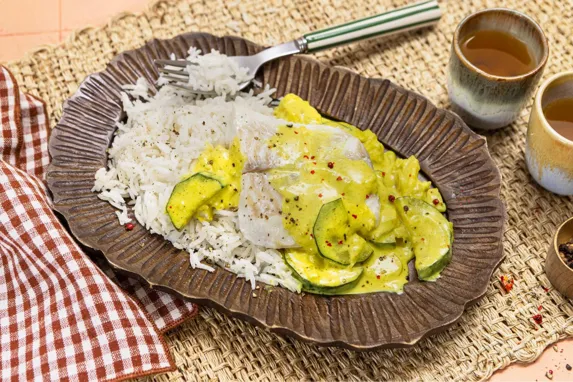
Quitoque is our number one meal kit for an athlete, for a very concrete reason: every recipe page publishes the full nutrition table per person. On the hake curry with courgette, a 30-minute dish labelled "High protein", we recorded 536 kcal, 31.11 g of protein, 66.19 g of carbs and 15.10 g of fat per person. No other cook-yourself box on the French market puts that level of detail in front of you as easily before you order. That is what makes it, in our view, the best meal kit for athletes available in France today.
The menu filters by label, including "High protein" and "Low calorie", which lets you build a whole week around one goal instead of taking the menu as it comes. Formats run from two to six portions: doubling a recipe to get the next day's lunch is immediate. Prices start at EUR 3.83 per plate on the larger plans, with a service rated 4.5/5 across more than 6,000 customer reviews. Our full test is in our Quitoque review.
What works for an athlete
- Full nutritional values per person, available before you order.
- "High protein" label on the menu, usable as a selection filter.
- Portions from 2 to 6, so doubling up for the lunch box is easy.
- EUR 3.83 per plate on the larger plans, one of the best rates on the market.
The limits
- You have to cook, count 25 to 35 minutes per recipe.
- Carbs stay high on some recipes, 66 g on the hake curry. To be weighed up during a cut.
The other boxes, by goal
Muscle gain: HelloFresh for volume

HelloFresh has the largest catalogue on the market and a set of useful tags, including "High protein", "Low carb" and "Calorie Smart". When building muscle, there are always several compatible dishes each week and the entry prices stay low. Two caveats: formats cap at four portions, and the price climbs sharply after the first order, around EUR 5 to 7 per portion. More in our HelloFresh review.
Cutting: Cheef for the framework, Les Commis for the cooking
Cheef is the only player to put figures on its protocol: programmes calibrated between 1,200 and 1,350 kcal per day depending on profile, with protein raised to 23% of total energy intake against 12 to 15% in a standard balanced diet, precisely to preserve muscle mass during weight loss. A dietitian follow-up and online sport classes come with it. The trade-off is clear: single-serve trays from EUR 4.90, with no room to adjust quantities. Our test is in our Cheef review.
Les Commis plays another card, chef-designed recipes with low GI and low calorie filters. It is the box to pick to cut without eating sad food, from EUR 4.75 per plate. It stays above the market average on price.
Zero cooking: Seazon and Aussitôt Bon
When the session ends at 9.30 pm, the best box is the one you do not cook. Seazon delivers single-serve dishes to reheat, with convenience we rate 9.5/10, but a value for money that remains its weak point. Aussitôt Bon cooks its dishes sous-vide at low temperature, offers an Équilibre range and more than 20 recipes a week, ready in 3 minutes, from EUR 6.90 per meal. Neither lets you adjust the portion: that is the price of convenience.
How much protein to aim for, concretely
For a 75 kg athlete in strength training, the 1.4 to 2 g/kg range gives 105 to 150 g of protein per day. Spread over three meals and a snack, that is 30 to 40 g of protein per meal. The Quitoque recipe recorded above, at 31 g per person, lands exactly on target with no supplementation.
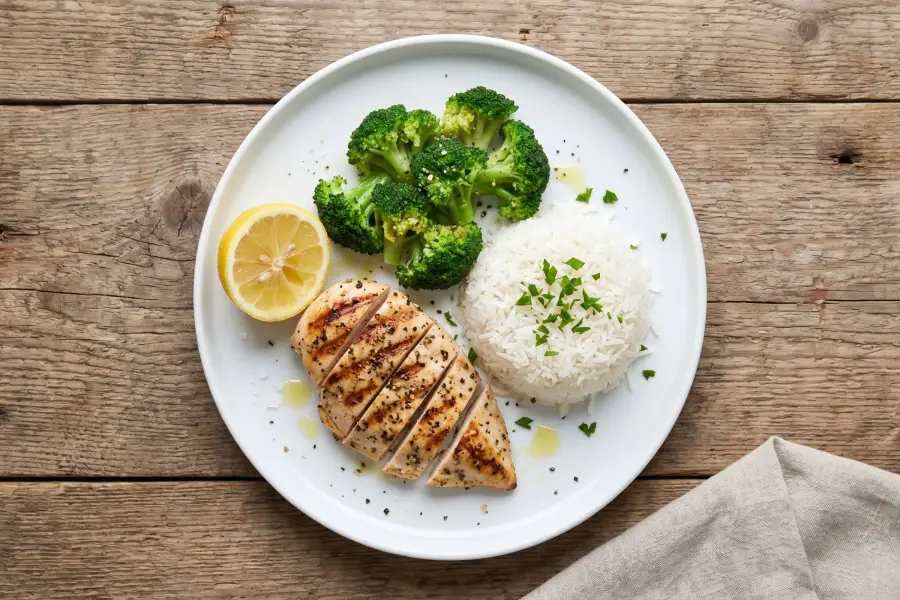
During a cut you have to keep protein up while bringing calories down, and published macros become decisive: a dish at 536 kcal with 31 g of protein has nothing in common with a dish at 700 kcal and 22 g of protein, yet both will pass for "balanced" on a product page. Our comparison of the best balanced meal kits covers that nuance brand by brand.
On budget, a week of five delivered meals costs between EUR 19 and EUR 45 depending on the box and the number of portions. The full benchmarks are in our guide on how much a meal kit costs.
FAQ
Which is the best meal kit for athletes?
Quitoque is the best choice for an athlete: its recipe pages publish the full nutritional values per person, protein and carbs included, and its menu can be filtered by the "High protein" label. A dish such as the hake curry with courgette shows 31.11 g of protein for 536 kcal per person, from EUR 3.83 per plate. For a controlled cut, Cheef raises protein to 23% of total energy intake.
Is a meal kit enough for building muscle?
For main meals, yes, provided you double the portions and pick the highest-protein recipes. A cook-yourself box such as Quitoque takes orders up to six portions, which covers dinner and the next day's lunch box. What no box covers is snacks and the immediate post-workout window: those intakes stay to be handled separately.
Do meal kits publish protein per portion?
Not all of them, and that is the real sorting criterion. Quitoque publishes the full nutrition table on every recipe page, per person and per 100 g. HelloFresh flags its dishes with "High protein" and "Low carb" tags without always giving the detail before you order. Ready meals such as Seazon or Aussitôt Bon mostly communicate on general balance, not on grams you can use in a nutrition plan.
Can you combine a meal kit with weight loss?
Yes, and it is even where boxes work best, because quantities are weighed in advance: no more portions estimated by eye. Cheef runs programmes at 1,200 to 1,350 kcal per day with a raised protein intake to limit muscle loss. A cook-yourself box works too, by picking the least calorific recipes and sticking to the stated portions. See our comparison of the best meal kit for batch cooking to prep the week in one go.